
HEALTHCARE
Patient data has to stay private for a lifetime. Its cryptography wasn’t built to.
Healthcare keeps its most sensitive data longer than almost any other sector, on devices that stay in service for years. Quantum Sentinel helps you find that cryptography, measure its exposure, and plan a transition that respects both.
Why it matters here
Health records are retained for many years by law and for a lifetime in practice, and genomic data is sensitive forever – it identifies not just a patient but their relatives, and it cannot be reissued. That combination of long confidentiality lifetime and irreplaceable content makes healthcare data a prime target for harvest-now-decrypt-later collection today. The estate compounds the problem: medical devices and imaging systems stay in service for a decade or more, long after the cryptography inside them should have been refreshed.
The regulatory picture
These are the drivers shaping cryptographic governance in healthcare – not claims that any framework mandates post-quantum cryptography by name.
HIPAA
The Security Rule requires safeguards for electronic protected health information; encryption is an expected control, and proposed updates would strengthen that expectation further.
FDA medical-device cybersecurity (§524B)
Device makers must now provide a software bill of materials and a vulnerability-management plan - the same visibility discipline that a cryptographic inventory brings to the algorithms inside.
Data-protection law
GDPR/UK GDPR treat health and genetic data as special-category information, requiring security appropriate to a risk that grows as classical cryptography ages.
Assurance frameworks
Programmes such as the NHS Data Security and Protection Toolkit and ISO/IEC 27001 make demonstrable cryptographic governance part of doing business.
Where cryptography hides in Healthcare
EHR & PACS Databases
EHR and PACS databases (encryption at rest).
FHIR & DICOM Interfaces
HL7 FHIR and DICOM interfaces (TLS transport).
Connected & Implantable Devices
Connected and implantable medical devices (embedded PKI, firmware signing).
Enterprise PKI & VPNs
Enterprise PKI, certificates and VPNs.
Research & Genomic Data
Research and genomic data stores.
Health-Information Exchange
Health-information exchange with partners.
How Quantum Sentinel helps
Enterprise CBOM
A living inventory spanning EHR systems, medical devices and research data.
Cryptographic Exposure Score
Prioritise by patient impact and clinical criticality.
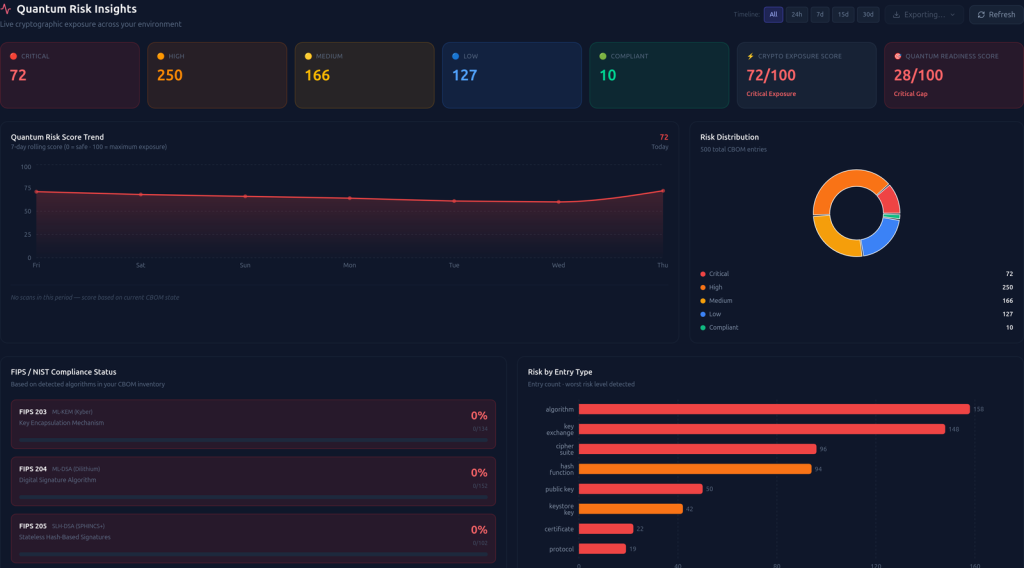
Quantum Readiness Score
Plan migration around real device and system lifecycles.
Outcomes for healthcare
- Locate the long-retention and genomic data with the highest harvest-now-decrypt-later exposure
- Bring the same visibility to internal cryptography that device SBOMs bring to software
- Plan device and system migration around real clinical lifecycles
See the cryptography protecting a lifetime of patient data.
The first step is always the same: visibility. Request a demo and see your cryptographic exposure.